Are you ready to learn how to crochet for beginners? In this complete and easy-to-follow guide, you’ll discover the most essential crochet stitches and techniques that every beginner needs to master. Whether you’ve never held a hook or just need a refresher, this step-by-step tutorial will walk you through everything — from making a slip knot to creating your first rows with confidence. Let’s get started on your creative journey into the world of crochet!
Basic stitches and techniques
SINGLE CROCHET (SC)
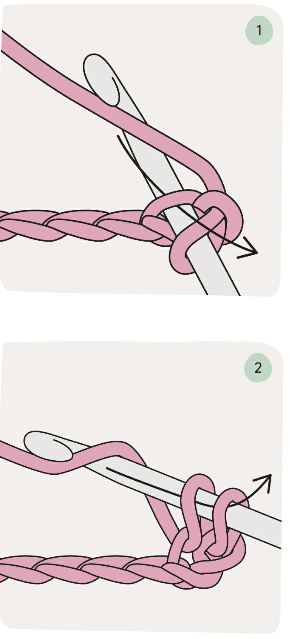
Insert the hook in the stitch, yo, pull through the stitch (1), yo, pull through both loops on the hook. (2)
HALF DOUBLE CROCHET (HDC)
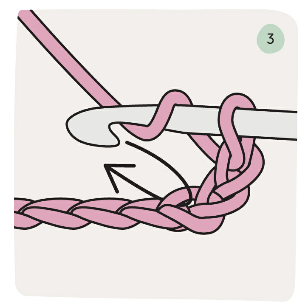
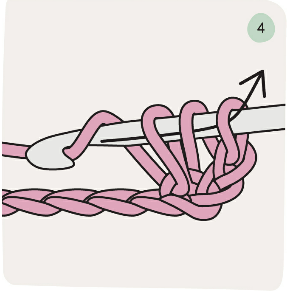
Yo, insert the hook in the stitch (3), yo, pull through the stitch (3 loops on hook), yo, pull through 3 loops on the hook. (4)
DOUBLE CROCHET (DC)
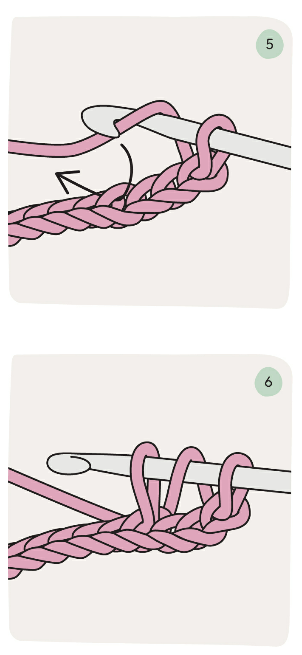
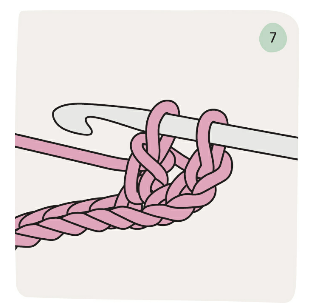
Yo, insert the hook in the stitch (5), yo, pull through the stitch (3 loops on hook) (6), yo, pull through first 2 loops on the hook, yo, pull through remaining 2 loops on the hook. (7)
REVERSE SINGLE CROCHET (RSC)
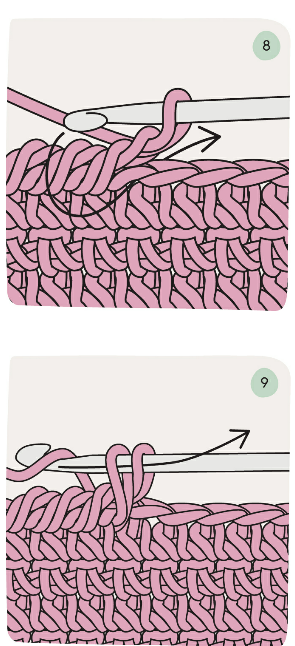
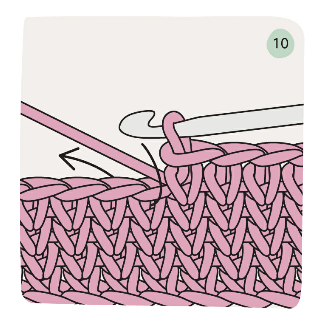
Also known as crab stitch. Beginning on the left-hand end of the work, make 1 ch, *insert the hook in the next stitch to the right (8), yo and pull through the stitch keeping the new loop on the hook to left of the one already there (so closer to tip of hook), yo with the working yarn and pull through two loops on the hook (9); rep from *
until before last st of row, slst in last stitch of the row.
CENTRAL SINGLE CROCHET (CSC)
Also known as waistcoat stitch. Insert your hook into the center of the V under the top loop, then complete the single crochet in the usual way.
EXTENDED SINGLE
CROCHET (ESC)
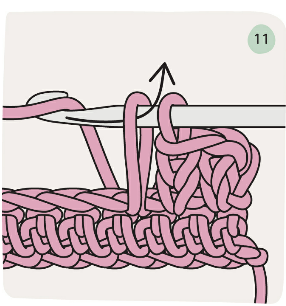
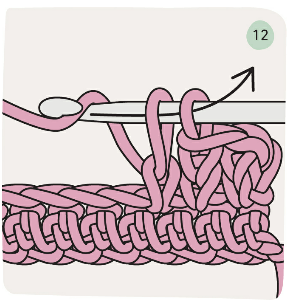
An extended single crochet is very similar to a regular single crochet: you insert the hook in the next st (under the two loops as normal), yo and pull through the stitch, yo, pull through one loop on the hook (11), yo, and pull through the re-maining loops. (12)
WORKING INTO FRONT OR BACK LOOP
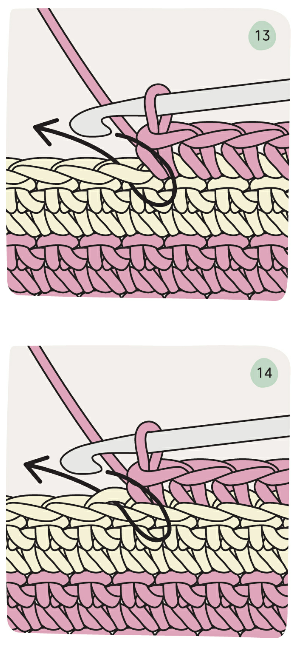
Normally you insert the hook into the stitch under both loops at the top. If instructed to work into the front loop only (FLO), work into the loop at the front. (13) If instructed to work into the back loop only (BLO), work into the loop at the back. (14)
BACK POST SINGLE
CROCHET (BPSC)
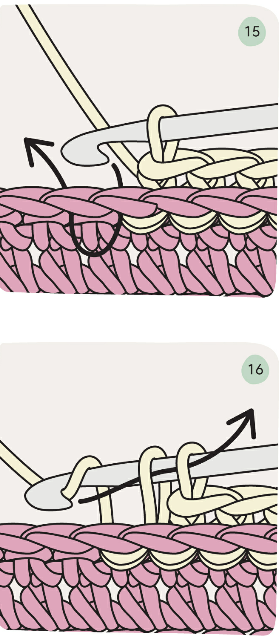
This stitch is worked around the post of a stitch instead on the top loops like usual. Insert the hook from back to front before the post of the stitch below, then bring it from front to back again (15), yarn over and pull through around the post of the stitch, yo, pull through all loops on the hook. (16)
CROCHET CORD
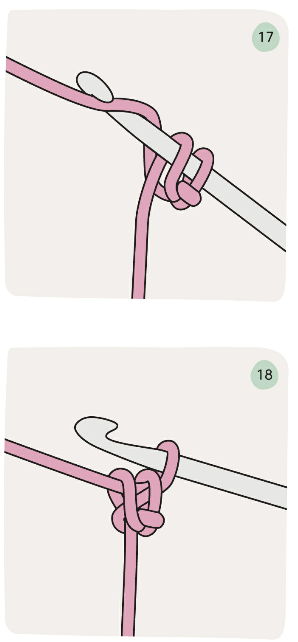
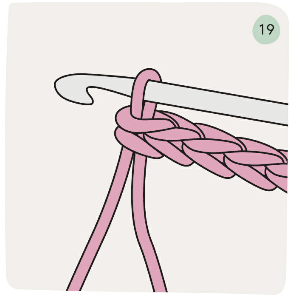
This technique is a tidy alternative to a starting chain at the beginning of your work. Work cord stitches loosely to avoid a tight edge. Leaving a tail of about 2.5 times the desired length of the cord, make a slip knot and place it on the hook. *From front to back, wrap the tail around the hook, yo with the working yarn (17), pull through the 2 loops on your hook (slip knot and tail) (18); rep from * until required number of stitches have been created. (19)
Changing color
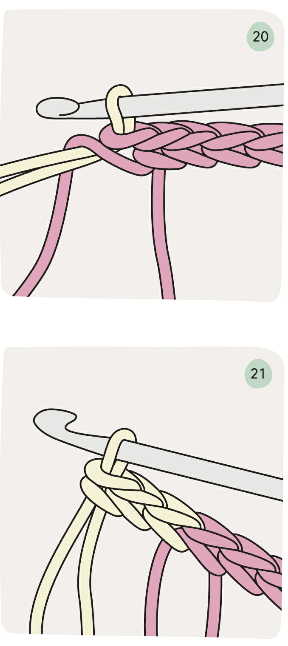
On the last stitch of the first color, wrap the tail around the hook, pick up the new color and pull through both loops on the hook (20), leaving a tail to continue working the cord with the new color. (21)
FAUX I-CORD EDGING
This edging emulates a knitted i-cord and can be done at the beginning or end of a project worked in the round.
To work at the beginning: make a chain as long as the edging, slip stitch in the first chain to join and work a round of single crochet. Do not join but continue in a spiral, [back post single crochet around, PM to denote beg of round] 3 or more times. Join the last round to the starting chain by working single crochet back loop only around stitches on the last round and the unused loops of the starting chain, slip stitch in the first stitch to join the last row marks the RS.
To work at the end: single crochet around, do not join but continue in a spiral, [back post single crochet around, PM to denote beg of round] 3 or more times. Leave as is, or make it more “tube-like” by fastening off, leaving a long tail at least twice the circumference of your work, then sewing the back loop of stitches on the last round onto the back of the first round of edging with-out going through to the right side of the work.
INVISIBLE JOIN WHEN WORKING IN ROUNDS
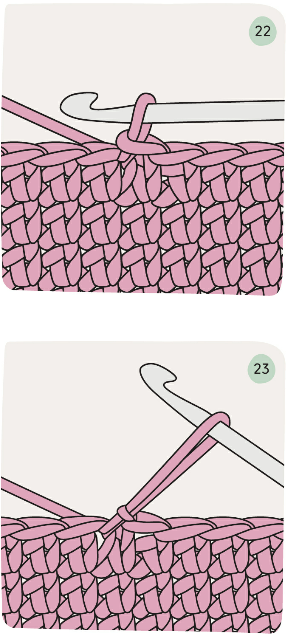
Make a slip stitch in the first stitch to join the round (22), then pull to tighten the slip stitch (23), 1 ch (which does not count as a stitch) and pull to tighten the chain (24). If the turning chain calls for more than 1 chain, then work the following chain counting the tightened chain as the first one.
INVISIBLE JOIN TO FASTEN OFF WHEN WORKING IN ROUNDS
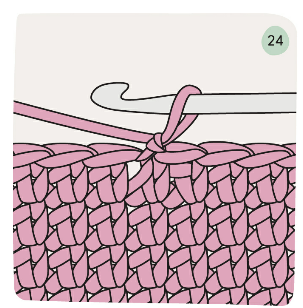
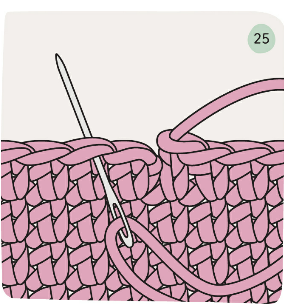
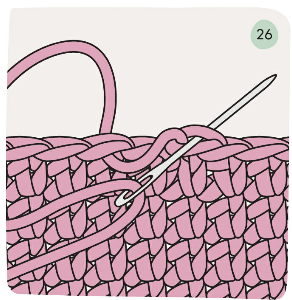
After finishing the last stitch of the round, cut the yarn leaving a tail and pull it through the stitch. Thread the tail into a tapestry needle, insert the needle under both loops of the second stitch of the round (25) and pull through, then insert needle into last stitch of the round in be-tween the top loops (26). Pull through and adjust the loop created to imitate the look of a stitch, then fasten off on the inside and weave in the end.
MATTRESS STITCH
Align the two pieces to be joined next to each other. Pass a threaded tapestry needle from back to front where the seam is to start on one piece. Pull through the stitch, then rep on the other piece, passing the needle from back to front. Con-tinue alternating from one piece to the other and threading through every stitch, making sure that your tension is even.